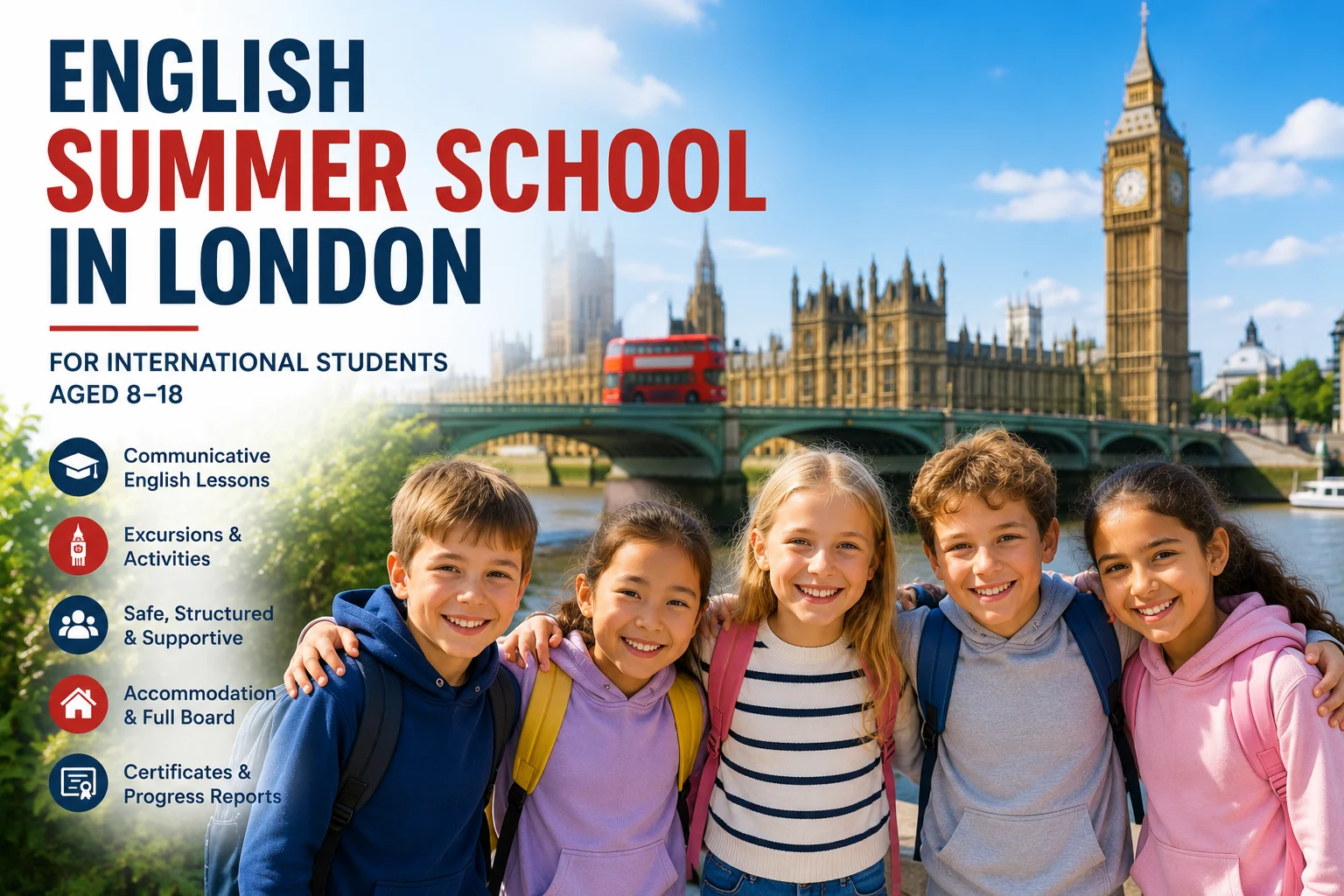
The right English summer school in London is an important decision for parents, education agents, school group leaders and international families. A strong summer programme should do more than provide English lessons. It should help students feel safe, supported and confident while giving them opportunities to use English in real situation
For students aged 8–17, the right programme can build language confidence, cultural awareness, independence and international friendships. For parents and agents, the right provider should offer clear communication, structured supervision, reliable programme information and a student experience that feels organised from the first enquiry.
London remains one of the most popular destinations for international students because it combines English-language learning with history, culture, museums, attractions, academic heritage, and global connections. However, not every summer language programme offers the same level of structure, support or clarity.
This guide explains what to look for when choosing a London summer school for international students, especially if you are planning for a child, a teenager, a school group, or an agent-led student group.
Why London Is a Strong Choice for English Language Learning
London gives international students the chance to learn English inside and outside the classroom. Students can practise vocabulary, listening, speaking and confidence through everyday experiences, from classroom discussion to supervised cultural visits.
A well-designed London English programme can help students:
- Improve practical communication skills
- Experience British culture in a meaningful way
- Build confidence using English with international peers
- Take part in activities beyond formal lessons
- Develop independence in a structured environment
- Return home with stronger language motivation
For many families, London also carries strong educational value. It is widely recognised as a centre for culture, academic life and international opportunity. This makes it attractive not only to students but also to parents and agents who want a programme that feels credible and aspirational.
What Makes a Good English Summer School in London?
A good summer language school in London should combine academic quality, student welfare, cultural immersion and clear communication. Parents want reassurance. Agents need reliable information. Students need a programme that feels engaging and age-appropriate.
When reviewing a programme, look beyond the headline price or location. The most important questions are:
- Who is the programme designed for?
- What age range does it support?
- How are students supervised?
- What does the academic programme include?
- Are activities connected to language confidence?
- Is communication clear for parents and group leaders?
- Are accommodation, meals and transfers included, or are they explained clearly?
- Is there a clear enquiry process for agents and schools?
The best programmes make these answers easy to find.
1. Check the Age Range and Student Fit
The first step is to check whether the programme is suitable for the student's age. A programme for young learners and teenagers should not feel like an adult language course with younger students added afterwards.
Students aged 8–17 need:
- Age-appropriate supervision
- Clear routines
- Supportive teachers
- Structured activities
- Safe movement between lessons, meals and excursions
- Parent or group leader communication
- Friendly opportunities to meet other international students

A strong junior English summer school in London should recognise that an 8-year-old and an 17-year-old have different needs. Younger students may need more reassurance and routine, while older teenagers may value independence, confidence-building and academic progression.
For this reason, parents and agents should look for a provider that understands the full student journey, not only the classroom.
2. Look for Communicative English Lessons
The academic programme should help students use English actively. Grammar and vocabulary are important, but young learners also need confidence in speaking, listening practice, and meaningful interaction.
A strong English summer programme should include communicative lessons where students can:
- Speak in pairs and groups
- Practise real-life language
- Improve pronunciation and fluency
- Build vocabulary through topics and activities
- Gain confidence in international settings
- Receive teacher support and feedback
The goal is not only to study English, but to use it.
This is especially important for international students who may understand English in school but feel nervous speaking it with new people. A good programme creates a supportive environment where students feel encouraged to try, practise and improve.
3. Prioritise Safety, Welfare and Supervision
For parents and agents, safety is one of the most important factors in decision-making. A safe English summer school in London should explain how students are supported throughout the programme, including lessons, activities, meals, excursions and daily routines.
Look for clear information about:
- Student welfare
- Supervision during activities
- Support for illness or homesickness
- Arrival and departure processes
- Emergency contacts
- Residential routines
- Staff communication
- Parent and group leader updates
Parents should not have to guess how the programme works. Agents should also be able to explain safety and welfare clearly to families before booking.
Strong welfare communication builds trust before students arrive. It also helps families feel confident that their child will be looked after in a structured environment.
4. Review the Accommodation and Residential Experience
Many international families search for an English summer programme with accommodation because they want a complete student experience. If accommodation is included, the programme should clearly explain the residential structure.
Parents and agents usually want to understand:
- Whether accommodation is full-board
- How meals are organised
- How students are supervised outside lesson time
- How routines are managed
- Whether the accommodation is suitable for the age range
- How students are supported in the evenings
- What information is provided before arrival
Accommodation should not be treated as a separate detail. For young international students, it is central to the overall experience.
A well-structured residential programme can help students feel settled, make friends and enjoy the wider summer school experience with confidence.
5. Choose a Programme with Meaningful Excursions and Activities
A strong English summer school with excursions should connect activities to cultural learning and language development. Excursions are not only entertainment. They give students opportunities to use English naturally while discovering the UK.

London offers many opportunities for student-friendly learning, including:
- Museums and galleries
- Riverside walks
- Guided cultural visits
- Landmark experiences
- Educational attractions
- Group activities
- Evening social events
Attractions and activity days can also add excitement and create memorable moments. For younger learners and teenagers, these experiences help build friendships and confidence.
The best programmes balance learning, cultural discovery and student enjoyment. They also make sure activities are supervised, age-appropriate and clearly organised.
6. Make Sure the Programme Supports Agents and School Groups
For education agents and school group leaders, the right programme should be easy to understand, easy to explain and easy to present to parents.
An agent-focused summer school should provide:
- Clear programme information
- Group booking support
- Parent-friendly materials
- Enquiry and meeting options
- Clear course dates and structures
- Communication before and during the programme
- Support for group leaders
- Clear next steps for partnership discussions
This matters because agents are not only choosing a programme. They are recommending a provider to families and schools. That recommendation depends on trust, clarity and confidence.
A website should therefore make it easy for agents to book a meeting, request group information, and quickly understand the programme structure.
7. Check Whether Parents Receive Clear Communication
Parents want to know what their child will do, where they will stay, how they will be supported and how progress will be communicated.
A parent-friendly English summer school should provide information about:
- Student schedules
- Academic progress
Welfare support - Activities and excursions
- Packing guidance
- Arrival and departure information
- Who to contact with questions
Some programmes also use digital tools or apps to support communication between students, parents, group leaders and the programme team. This can help families follow the student journey more easily, especially when students are travelling from another country.
Good communication is not a small detail. It is a trust signal.
8. Look for Academic Progress Reports and Certificates
For many families and schools, a summer programme should create visible educational value. Certificates and progress reports can help show what the student has completed and how they have developed during the programme.
These can be especially useful for:
- Parents who want evidence of learning
- Schools, monitoring student development
- Agents presenting programme value
- Students building confidence and motivation
A progress report does not need to overcomplicate the experience. It simply gives families and schools a clearer view of the student's learning journey.
9. Consider the Full Student Experience
The best London English programme for teenagers and young learners should feel joined up. Lessons, accommodation, meals, activities, excursions, communication and welfare should all work together.
A strong student experience includes:
- A welcoming arrival process
- Friendly group atmosphere
- Structured daily routines
- Engaging English lessons
- Supervised excursions
- Social activities
- Opportunities to make friends
- Clear support from staff
- A positive ending with certificates and reports
When these elements work together, students are more likely to feel confident, settled and motivated.
10. Ask the Right Questions Before Booking
Before choosing a summer school, agents and parents should ask:
- What age range is the programme designed for?
- Are lessons communicative and student-centred?
- What support is available for welfare and supervision?
- Is accommodation included?
- What meals are provided?
- Are airport transfers available?
- What excursions and activities are included?
- How are parents and group leaders updated?
- Are progress reports or certificates provided?
- What is the process for group bookings or agent partnerships?
If a provider can answer these clearly, it is usually a positive sign.
Why Ideal Linguistics Is Being Built Around This Student Journey

Ideal Linguistics is designed as a premium London English programme for international students aged 8–17. The programme brings together communicative English lessons, cultural experiences, student support and a clear journey for agents, schools and families.
The aim is to support students academically and socially while giving parents and group leaders reassurance throughout the experience.
Ideal Linguistics is suitable for:
- Education agents planning group bookings
- School group leaders organising international student travel
- Parents looking for a safe and structured London programme
- International schools seeking English language opportunities
- Students who want to build confidence through English and cultural immersion
The programme is also being shaped around clear communication, student schedules, parent updates, group leader support and academic progress reporting.
English Programmes in London: Summer and Winter Options
Ideal Linguistics offers a structured English language programme for international students aged 8–17, including winter and summer residential programmes in London.
These include:
Winter English Course
The Winter English Course is a residential winter holiday programme at Kensington Park School in London, running from 20–30 December. Designed primarily for groups, with limited individual availability depending on dates, the programme combines classroom-based English learning with communicative immersion, winter-themed London activities, central London sightseeing, museum visits, sports, games and evening socials.
Students benefit from full-board luxury en-suite boarding accommodation in central London, airport transfers for groups, a full activity and excursion programme, evening entertainment, and 24/7 welfare and safeguarding support.
Summer Centre Programme
The Summer Centre Programme is a residential summer school for international students aged 8–17, running from 1 July to 7 August. The programme includes 15 hours of English tuition per week, full-board accommodation, daily activities, one full-day excursion per week, two half-day excursions per week, an end-of-course certificate and group leader support.
Excursions and activities may include a full-day London experience with walking tour, river cruise and free time, optional London Eye upgrade, Thorpe Park, football stadium tours, Tower of London, London Dungeons, Science Museum, Natural History Museum, sports tournaments, discos, talent shows and team games.
The programme uses UK boarding school accommodation with full board. Final venue details are currently being confirmed and will be shared with agents and families once available.
Kensington Park School Summer Programme
The Kensington Park School Summer Programme is a premium London summer programme for students aged 8–17, running from 14 August to 6 September. Located at Kensington Park School in London, the programme combines intensive English tuition, academic workshops, project-based learning, cultural activities, social experiences and a structured residential student experience.
Students are typically accommodated in twin or triple en-suite rooms with modern facilities and high levels of supervision. The programme also includes one full-day excursion and two half-day excursions per week, as well as airport transfers for groups. Excursions and activities may include London walking tours, museums and galleries, a River Thames cruise, West End and cultural experiences, university and career-focused workshops, sports and social activities.
This option is suitable for groups and individual students looking for a smaller, more personalised London summer learning environment.

Final Thoughts: Choose Structure, Safety and Confidence
Choosing the right English summer school in London is about more than location. It is about trust.
Parents want to know their child will be supported. Agents want a reliable partner. Schools want a structured group experience. Students want to enjoy London, meet new friends and feel more confident using English.
A strong programme should bring all of this together through:
- Clear academic structure
- Safe student support
- Meaningful cultural experiences
- Parent and agent communication
- Suitable accommodation and routines
- Progress recognition
- A professional enquiry process
For agents, schools and families planning ahead, early conversations are the best way to understand programme suitability and group options.
Interested in Summer 2027 group opportunities?
Book an Agent Meeting
Planning for a student or family enquiry?
Register Interest
FAQs
The best English summer school depends on the student's age, learning goals, welfare needs and preferred programme structure. Parents and agents should look for a programme that combines communicative English lessons, safe supervision, accommodation, cultural activities and clear communication.
Ideal Linguistics is designed for international students aged 8–17.
London gives students the opportunity to practise English in a real cultural setting while experiencing museums, attractions, guided visits and international student life.
Parents should look for clear welfare information, structured supervision, age-appropriate activities, residential support, communication processes and staff guidance throughout the programme.
Yes. Education agents can book a meeting to discuss programme details, group opportunities and partnership options.