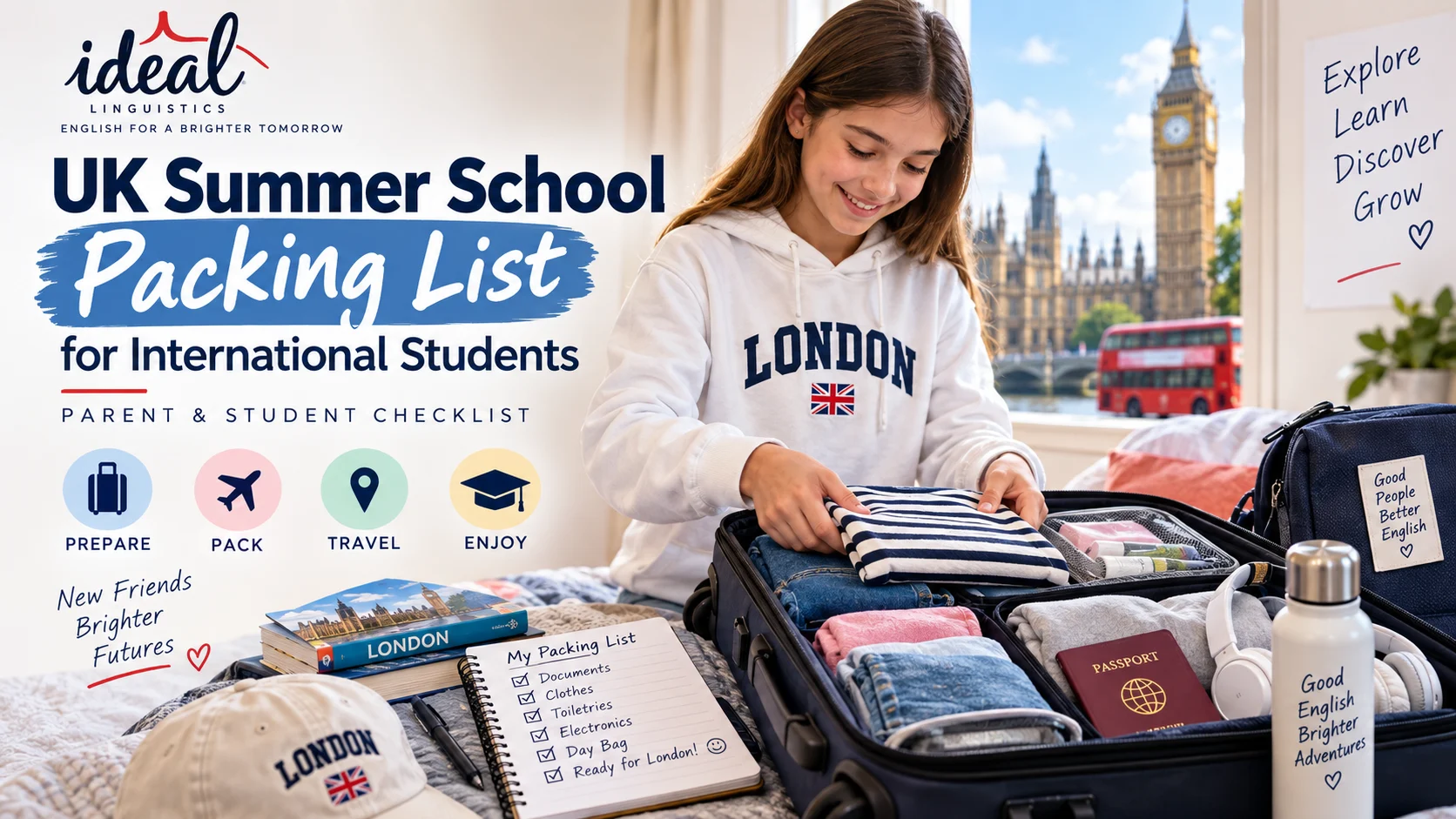
Preparing for a UK summer school should not mean filling the largest suitcase you can find.
For most international students, the aim is much simpler: bring the documents that are difficult to replace, practical clothes for changing British weather, comfortable footwear, everyday personal items and anything specifically requested by the programme.
A useful UK summer school packing list should separate three things:
- What belongs in the main suitcase
- What should stay with the student during the journey
- What parents should confirm with the summer-school provider before packing
If your family is still comparing programmes as well as preparing for travel, start with our guide on how to choose an English summer school in London. It covers the wider questions parents may want to consider around learning, accommodation, activities, student support and programme structure.
Quick UK Summer School Packing Checklist
For most international students, this is a useful starting point:
| Category | Useful items to prepare |
| Travel | Passport, required entry documents, tickets and arrival information |
| Parent information | Consent or supporting documents where applicable and emergency contacts |
| Clothing | T-shirts, trousers or shorts, underwear, socks and light layers |
| Weather | Lightweight waterproof jacket, jumper or hoodie and sun hat |
| Footwear | Comfortable walking shoes or trainers |
| Activities | Sportswear or other clothing specifically requested by the programme |
| Personal care | Toothbrush, toothpaste, toiletries and sun protection |
| Health | Required prescription medicines and supporting documentation |
| Electronics | Phone, charging cable and suitable UK plug adaptor |
| Everyday use | Small backpack, reusable water bottle, notebook and pens |
| Money | Suitable payment method and limited emergency funds |
| Residential life | Nightwear and items specifically requested by the school |
This is a general checklist for international students, not an Ideal Linguistics-specific list of required items.
Always follow your programme’s final joining information where it provides more detailed instructions.
Before You Pack: Check What Your Summer School Provides
One of the easiest ways to overpack is to assume that everything a student uses at home needs to travel with them. Before closing the suitcase, check what the programme provides and what students are expected to bring themselves.
Laundry
Find out whether students will have access to laundry during their stay and how frequently it is available. This can make a significant difference to the amount of clothing required.
A student who can wash clothes during the programme may need considerably fewer T-shirts, socks and everyday outfits than someone packing for the full stay without laundry access. Do not assume a particular laundry arrangement unless the programme has confirmed it.
Towels and bedding
Some residential programmes provide towels and bedding. Others may ask students to bring particular items.
Check before packing. A towel or set of bedding can occupy a surprising amount of suitcase space, making this one of the most useful questions to answer before departure.
Residential or day programme?
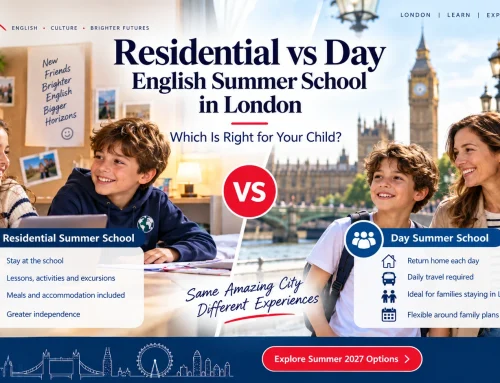
What a student needs also depends on the type of summer school they are attending. A residential student may need nightwear, additional personal-care items and belongings for life in accommodation, while a day student may return to family accommodation each evening. Parents who are still considering the two formats can read our comparison of a residential vs day English summer school in London.
Sports and activity requirements
Avoid bringing specialist equipment simply because the programme includes activities. Instead, find out whether students need specific shoes, sportswear, swimwear or other equipment for their confirmed programme. A comfortable pair of trainers that the student already wears regularly will often be more useful than several pairs of less practical shoes.
Medication arrangements
Parents should understand the programme’s procedures for declaring, storing or administering medication before the student travels. Medication should not become a last-minute airport or arrival issue. Check programme procedures and the official travel requirements relevant to the student’s particular medication well before departure.
Programme-specific rules
Also check any instructions covering:
- Valuables
- Mobile phones
- Tablets or laptops
- Luggage labelling
- Spending money
- Specialist activity clothing
- Prohibited items
The provider’s official joining instructions should always take priority over a generic online packing list.
Important Documents and Hand-Luggage Essentials
The most important items should not disappear into the bottom of a checked suitcase.
A student’s cabin bag or personal travel bag should normally contain the documents and essential information needed to complete the journey and arrive safely.
Passport and entry documents
Keep the student’s passport and required travel or entry documents easily accessible. Travel requirements depend on nationality and individual circumstances, so families should check current official UK Government information rather than relying on an old blog post or another family’s previous experience.
Ideal Linguistics also provides general UK visa information for English summer school students, including guidance on where families should check current visa or Electronic Travel Authorisation requirements.
Ideal Linguistics does not provide immigration advice, so official government guidance should always be used to determine the requirements applying to an individual student.
Airline cabin-baggage allowances also differ. Check the permitted size, weight and number of bags directly with the airline before travelling.
Documents for students under 18
International summer-school students may travel with their parents, alone, as part of an organised group or with an adult who is not their parent. This makes supporting documentation particularly important.
Depending on the student’s circumstances, parents may need to prepare evidence relating to parental consent, travel arrangements and who will be responsible for the child while they are in the UK. Check current UK Government requirements before travelling.
Arrival and emergency information
Give the student a simple travel folder containing the information they may actually need during the journey.
Useful information may include:
- Programme contact details
- Arrival instructions supplied by the organiser
- Transfer information where applicable
- Accommodation information provided to the family
- Parent or guardian telephone numbers
- Travel insurance details where relevant
- Appropriate health or medication documentation
Parents should keep separate copies of important information rather than relying only on documents carried by the student.
What Clothes Should You Pack for a UK Summer School?
The simplest rule for a British summer is:
Pack layers rather than preparing for only one type of weather.
Students do not need a suitcase filled with winter clothing, but they should not arrive prepared only for hot sunshine either.
British summer conditions can change, so clothing that works together is more useful than several highly specific outfits.
Pack clothes that work together
A practical wardrobe might include:
- Lightweight T-shirts or tops
- Comfortable trousers or shorts
- Underwear and socks
- A hoodie, jumper or lightweight fleece
- A lightweight waterproof jacket
- A sun hat
The aim is to allow the student to add or remove a layer as conditions change. A reusable water bottle and suitable sun protection are also sensible for students spending time outdoors.
Choose footwear for the programme, not the photograph
A summer programme in London can involve lessons, activities, walking and excursions. Comfortable footwear matters. Students should ideally bring shoes or trainers they have already worn rather than relying on brand-new footwear during busy activity or excursion days. Depending on the confirmed programme, sports trainers or other activity-specific footwear may also be required.
Pack activity clothing only when relevant
Sportswear can be useful at a residential programme, but avoid guessing about specialist clothing. If swimming, sports or another activity requires something specific, check the programme information first.
Remember residential life
Residential students also need comfortable clothing for time spent in their accommodation.
Consider packing:
- Suitable nightwear
- Comfortable casual clothing
- Underwear and socks
- A simple bag for used laundry
Exactly how many outfits are necessary should depend on the length of the stay and confirmed laundry arrangements.
Toiletries, Medicines and Personal Care
Students will normally need familiar everyday essentials such as:
- Toothbrush
- Toothpaste
- Deodorant
- Haircare products
- Basic toiletries
- Personal-care products appropriate to the student
There is little benefit in flying internationally with oversized bottles of everyday products that can easily be replaced if necessary.
Remember airport liquid restrictions
Airport-security rules can vary between airports.
Do not assume that the rules applying at the departure airport will necessarily be identical at every connecting or return airport.
Before travelling, check:
- Departure-airport rules
- Connecting-airport rules
- UK airport requirements
- The airline’s cabin-baggage guidance
A useful general packing principle is:
journey essentials in hand luggage; larger everyday toiletries in checked luggage where appropriate.
Prescription medicine needs extra planning
Do not place important prescription medicine casually into a checked suitcase without checking the requirements first.
Parents should confirm:
- The current UK rules applying to the medicine
- Airline requirements
- Departure-country requirements
- Programme medication procedures
- Any documentation the student may need
Some medicines may have additional rules or documentation requirements, so this should be checked individually rather than relying on a generic packing recommendation.
Electronics and UK Plug Adaptors
A phone and charger are only useful if the student can actually connect them to a UK socket.
The United Kingdom uses Type G plugs, which have three rectangular pins.
Students travelling from countries using a different plug format will therefore normally need a suitable travel adaptor.
Remember that a plug adaptor changes the physical connection. It does not necessarily convert the electrical voltage used by the device.
Check the manufacturer’s information on electrical equipment before travelling.
For most students, the useful electronics list can remain short:
- Mobile phone
- Charging cable
- Appropriate UK adaptor
- Any device specifically required for the programme
Before packing power banks, spare batteries or unusual electrical equipment, check current airline rules.
What Should Go in a Student’s Day Bag?
Do not think only about the main suitcase.
A lightweight backpack can become one of the most useful items during a residential summer programme because students may use it during lessons, activities and excursions.
Depending on the day and programme rules, useful items may include:
- Reusable water bottle
- Lightweight waterproof
- Sun hat or sunglasses when appropriate
- Phone where permitted
- Small amount of spending money or an appropriate payment card
- Notebook and pen
- Tissues
- Approved personal essentials
The student should be able to carry the bag comfortably themselves.
Money and Valuables
Summer school is not the right time to bring every expensive or sentimental possession from home. Items such as expensive jewellery, irreplaceable sentimental objects and unnecessary electronic devices can add responsibility without improving the student’s experience.
Parents should check the individual programme’s spending-money recommendations and payment arrangements rather than choosing an arbitrary amount from an online packing list.
Students should also understand:
- Where money or cards will be kept
- What they may need money for
- How much they can reasonably spend
- Who they should speak to if something is lost
What Not to Pack
A useful summer-school packing list should also help families decide what can stay at home.
Avoid unnecessary items such as:
- Excessive quantities of clothing
- Expensive jewellery
- Irreplaceable sentimental belongings
- Multiple electronic devices without a clear purpose
- Specialist sports equipment that has not been requested
- Oversized toiletries when smaller quantities are sufficient
- Restricted items that could create problems at airport security
Airlines and airports may apply different rules, so always check the requirements for the actual journey.
The 48-Hour Parent and Student Packing Check
Two days before departure, stop adding unnecessary items to the suitcase and begin checking the essentials.
Parent check
Confirm the following.
Documents:
The passport and required travel documents are ready.
Consent:
Any documentation relevant to an under-18 student’s travel arrangements has been prepared.
Programme information:
Arrival instructions, contacts and joining information are accessible.
Health:
Medication and relevant supporting documentation have been prepared correctly.
Travel:
Airline baggage and hand-luggage allowances have been checked.
Communication:
The student knows how to contact a parent, group leader or programme representative if needed.
Student check
The student should be able to answer these questions themselves:
- Where is my passport?
- Where are my arrival instructions?
- Which bag contains my essential medication?
- Can I identify my suitcase?
- Do I know who I am travelling with or meeting?
- Can I carry my own day bag comfortably?
This last stage matters because good preparation should not exist only inside a parent’s head.
Students should understand the essentials too.
Packing for a Residential English Programme in London
Packing becomes much easier once families understand how the programme is structured.
A residential programme requires students to prepare for more than classroom lessons. Their belongings may need to support:
lessons → residential life → activities → excursions
Parents considering this type of experience can learn more about the Ideal Linguistics residential English summer programme in London.
Ideal Linguistics’ current Summer 2027 course information describes a residential programme for international students aged 8–17, combining English learning with accommodation, organised activities and cultural experiences.
The practical packing lesson is simple:
You do not need four separate wardrobes for four parts of the programme.
Instead, choose practical items that can work across several situations.
A comfortable pair of trainers, for example, may work for everyday programme life, walking and some activities. A lightweight waterproof can fit easily into a day bag without becoming another large piece of luggage.
Versatility is more useful than volume.
Finished Preparing? Explore the Programme
Once you understand what an international student needs to prepare for a UK summer school, the next step is making sure the programme itself matches their age, learning needs and preferred experience.
Ideal Linguistics provides English programmes in London for international students aged 8–17, including residential summer options that combine English learning with organised activities and cultural experiences.
Explore Ideal Linguistics courses
FAQs
Start with essential travel documents, practical layered clothing, comfortable shoes, a lightweight waterproof jacket, nightwear, toiletries, prescribed medicines, a suitable UK plug adaptor, phone charger, reusable water bottle and small day bag.
Before deciding how many clothes to bring, check whether laundry is available during the programme.
A lightweight waterproof jacket is a practical choice because British summer weather can change.
A packable waterproof is usually more useful for a summer programme than a bulky winter coat.
Essential medicine may need to remain accessible during the journey, but the correct arrangements depend on the medication and travel circumstances.
Parents should check current airport, airline and UK requirements and confirm the summer school’s medication procedures before travelling.
The UK uses Type G electrical sockets with three rectangular pins.
Students travelling from countries using other plug types should check whether they need a suitable UK travel adaptor.
Do not assume.
Ask the residential programme what is provided before packing bulky towels or bedding.
Requirements depend on nationality and the student’s individual travel arrangements.
Parents should check current official UK guidance relating to entry requirements, parental consent and travel by children, particularly when the student is travelling without a parent or with another adult.
There is no single quantity that works for every summer school.
The appropriate amount depends on:
Programme length
Laundry arrangements
Planned activities
Expected weather
What the provider has asked students to bring
Packing versatile clothing that can be layered is usually more useful than bringing a different outfit for every possible situation.
Important documents and items that may be needed during the journey should remain accessible.
Depending on the student’s circumstances, this may include their passport, travel information, arrival instructions, relevant documentation, approved essential medication, phone and charging equipment.
Always follow current airport and airline cabin-baggage rules.